
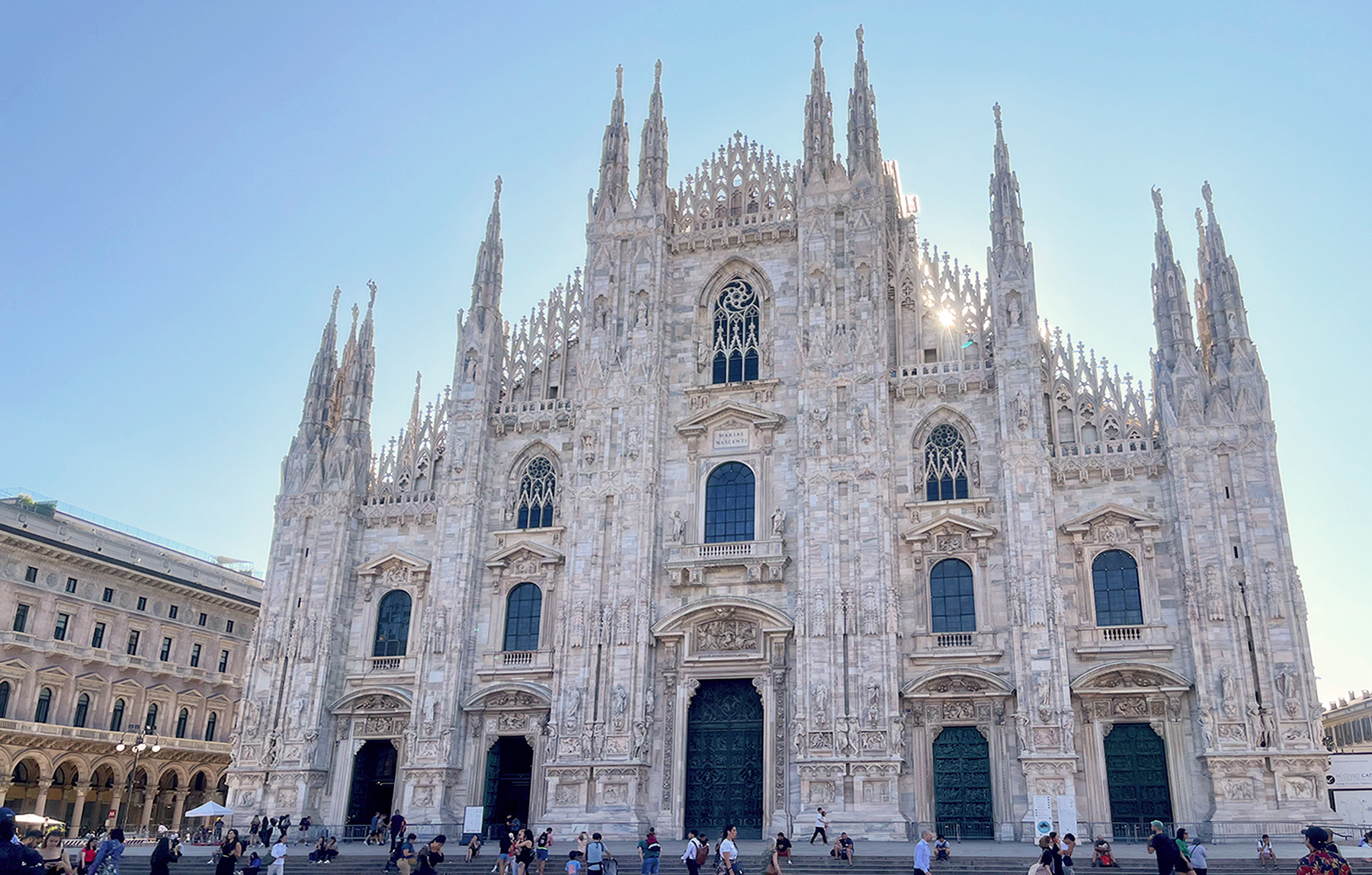
The Duomo is undoubtedly one of the most iconic and important sites in Milan. Located in the heart of the city just steps from the Galleria shopping arcade, La Scala opera house and a number of other churches and museums, the Duomo has defined the very nature of the city we see today.
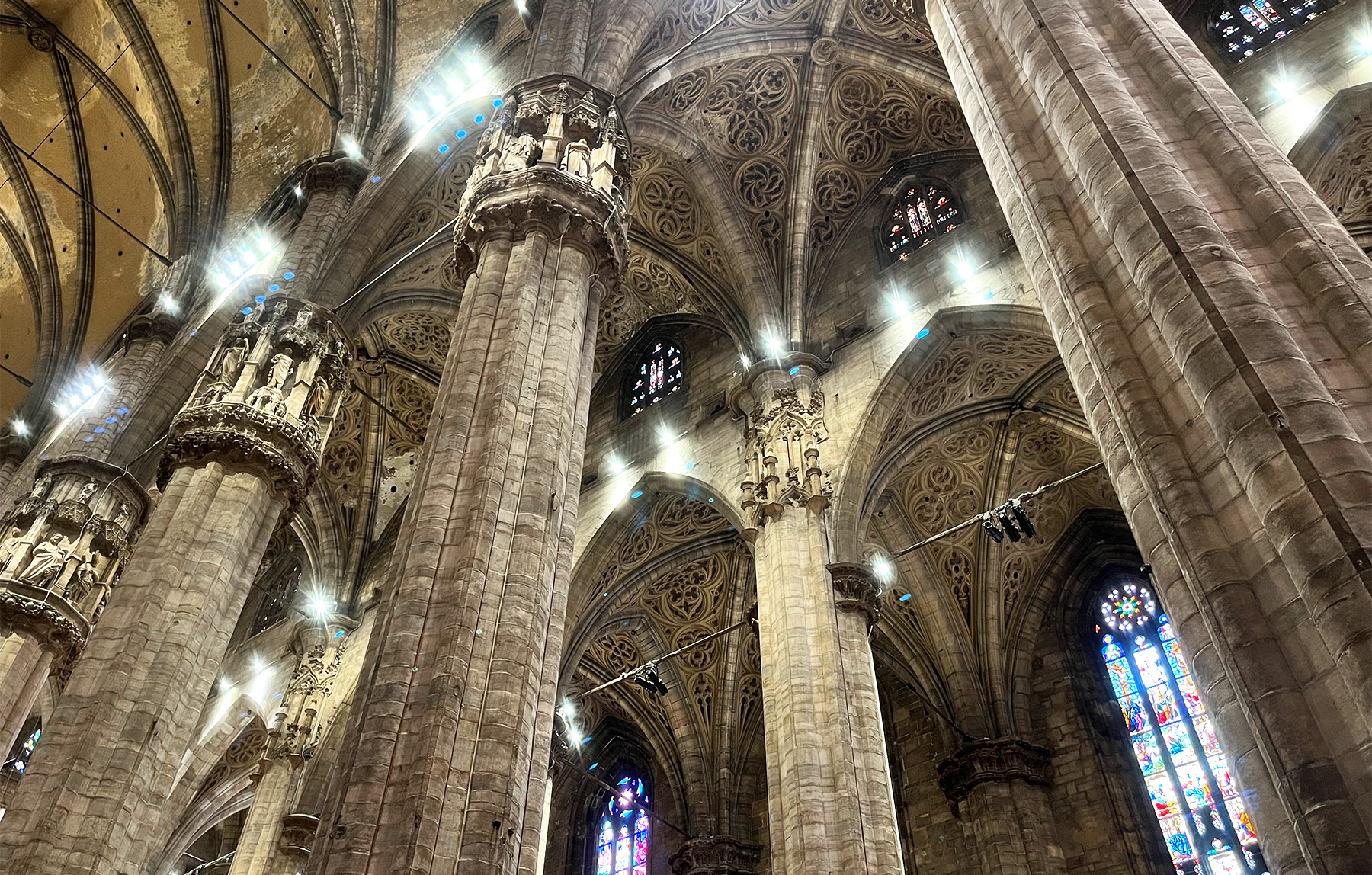
Built to hold 40,000 worshipers, the entire population of Milan at the time, construction of the catehdral began in 1368 at the height of the Gothic period and spanned more than 600 years. Gothic as an architectural style was rare in Italy, but was chosen for the Duomo by the dukes of Milan to impress their counterparts in Germany and France. And impress it continues to do today with its soaring spires, flying buttresses and pointed arches, plus stained glass, statues and other artistic treasures that tell stories spanning from the Old Testament through WWII. It’s no wonder the Duomo boasts many superlatives, including it being one of the largest cathedrals in the world.
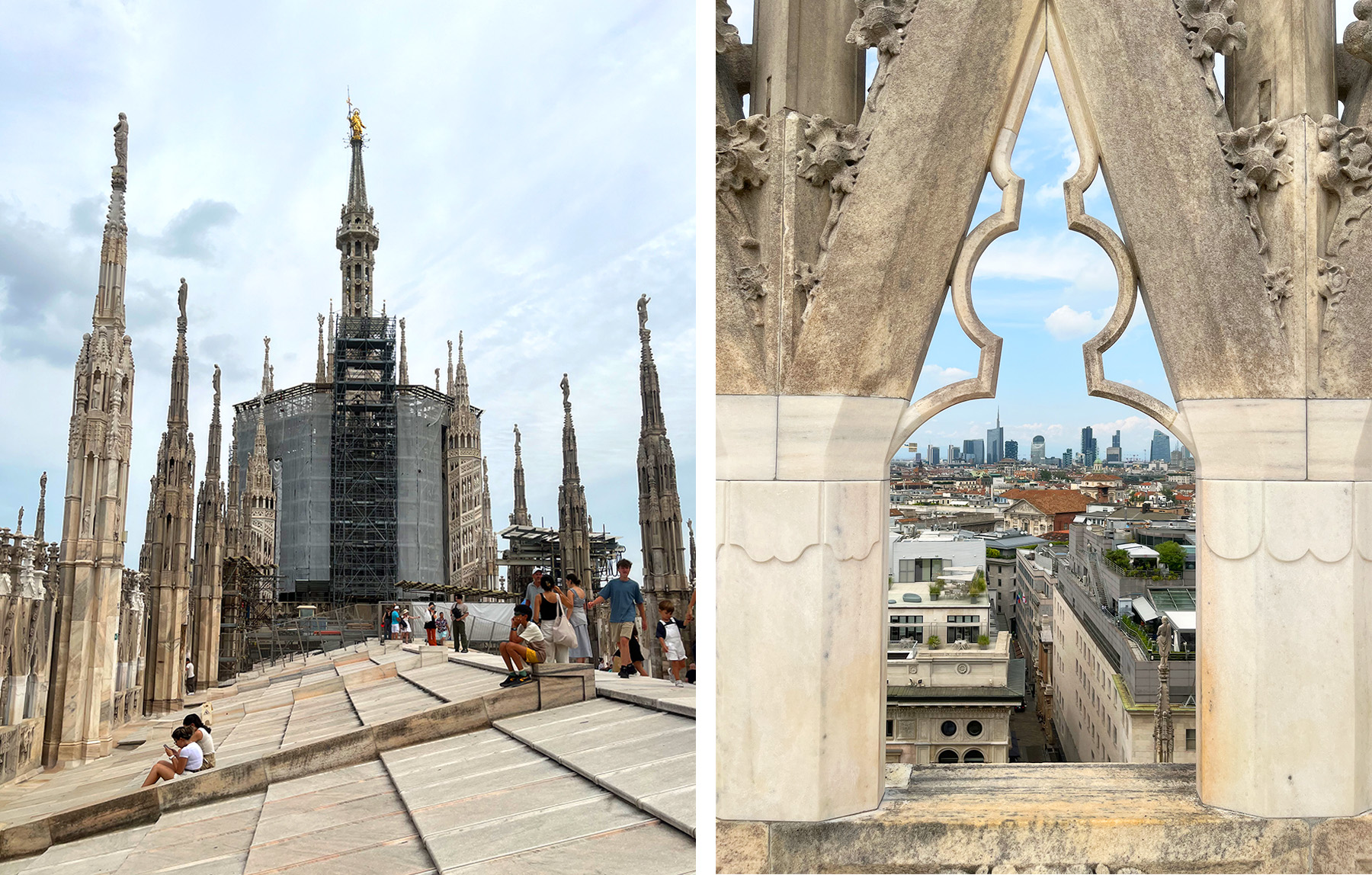
A visit to the Duomo can include a combination of options including the cathedral, terraces (by lift or by stairs), museum, archeological area and more, so it’s best to read up on the available tickets and purchase the one that’s best for you in advance to avoid unnecessarily waiting in line. For me, the highlight is beginning with a climb to the terraces via stairs, where you’re able to walk through a maze of architectural elements and get an up-close look at the Duomo’s exquisite detail, plus panoramic views of the city and square below. Then continue down and inside the church before heading to the museum for more context and history on this magnificent site. Until then, here are 5 interesting facts about the Duomo in Milan.
1. The Duomo is adorned with 3,400 statues
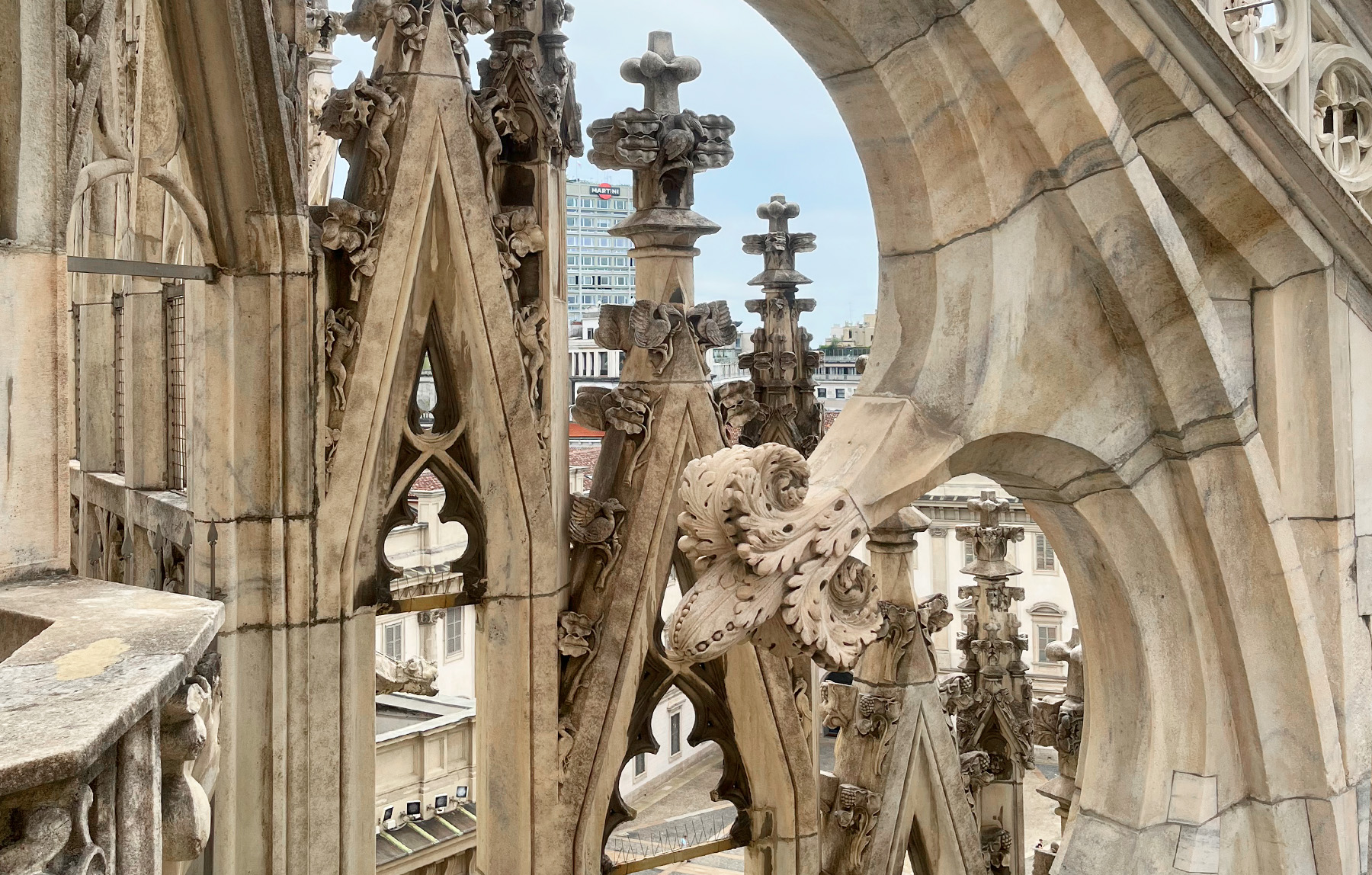
One of the most striking features of the Duomo is how richly decorated it is both inside and out. In fact, the cathedral boasts no less than 3,400 statues chronicling the who’s who in Milanese religious, political and civic history. From saints and sinners to sirens and saviors, deities, dictators and more, displaying a range of emotions and stories as told by sculptors from all over Europe between the 14th and 20th centuries. The intricacy of detail is something that can’t be fully appreciated in a single visit and poses something of a scavenger hunt for even the most eagle-eyed traveler. Inside you’ll find a grotesque statue of the martyr St. Bartolomeo who was skinned alive by the Romans, and outside there’s a hundred or so gargoyles that serve as drains pouts when not scaring away evil spirits. Look closely, as each of the Duomo’s 135 iconic Gothic spires also serves as pedestal for as many statues who keep a watchful eye over the city. The largest and most important of these is the gilded Madonnina, crowning the center of the cathedral’s stone forest.


2. The Madonnina once marked the highest point in Milan
In 1774 the Duomo’s highest spire of the Duomo was topped with a 13.65-foot statue of the Virgin Mary, known as the Madonnina. At 365-feet tall, the Duomo was the highest building in Milan, creating a sort of unwritten rule that no building could exceed the Madonnina in height. Made of copper and covered in gold with outstretched hands and 12 stars encircling her upward-turned head, the Madonnina has long been an important symbol in Milan as protector of both the church and city. The roles reversed during WWII the statue was covered in grayish cloth to protect it from being a target for bombings. The Madonnina remained the highest point in Milan until the 1960s when the Pirelli skyscraper was constructed in the northern part of the city. To make up for this, a copy of the statue was made to put atop the new 417-foot modern tower, and has since become a tradition that has continued with all new construction of buildings that exceed the Madonnina in height.
3. The Duomo is covered entirely in marble from a private quarry
Original plans for the Duomo called for it to be built with brick, which was quickly abandoned for the gorgeous marble that literally covers the cathedral from top to bottom. This distinctive pinkish-hued marble comes from the Candoglia marble quarry, a gift exempt from taxes by the first Duke of Milan, Gian Galeazzo Visconti for exclusive use in the construction of the cathedral. Located more than 60 miles away, the marble had to be transported by water across Lake Maggiore and down canals to a port near the site of the cathedral in a journey that took about a week. Marble is still sourced from the Candoglia quarry today for ongoing preservation, maintenance and restoration work, which continues to be overseen by the 600-year-old Veneranda Fabbrica del Duomo di Milano. The canals, called navigli, also remain part of the fabric of Milan and serve as a vibrant destination for nightlife.

4. The Duomo houses a nail from the True Cross
Churches throughout the world often serve as important reliquaries and the Duomo is no exception. Inside the church look high above the altar for a tiny red light, which marks the spot where a nail from the True Cross that Jesus was crucified on is kept. This relic was purportedly brought to Milan by St. Helena, the mother of Emperor Constantine and devout Christian, in the 4th century at a time when Milan was the capital of the Western Roman Empire. The relic is hidden away in a tabernacle and only on display for a handful of days each year in September.

5. Napoleon helped speed up construction of the Duomo
In 1805 the one and only Napoleon Bonaparte’s coronation took place under the cathedral’s dome. Perhaps not so coincidentally, he was crowned King of Italy with the Iron Crown of Lombardy, a relic that is said to have been made from another nail used at the crucifixion of Jesus. Such an important event helped speed up the construction of the Duomo, with the façade and other decorative elements such as the spires and stained-glass windows essentially finished by 1811. The same year a statue of Napoleon was placed atop of one of the cathedral’s spires as a form of thanksgiving. The official completion of the Duomo wasn’t until more than a century later in 1965, with renovations and restorations still ongoing today.
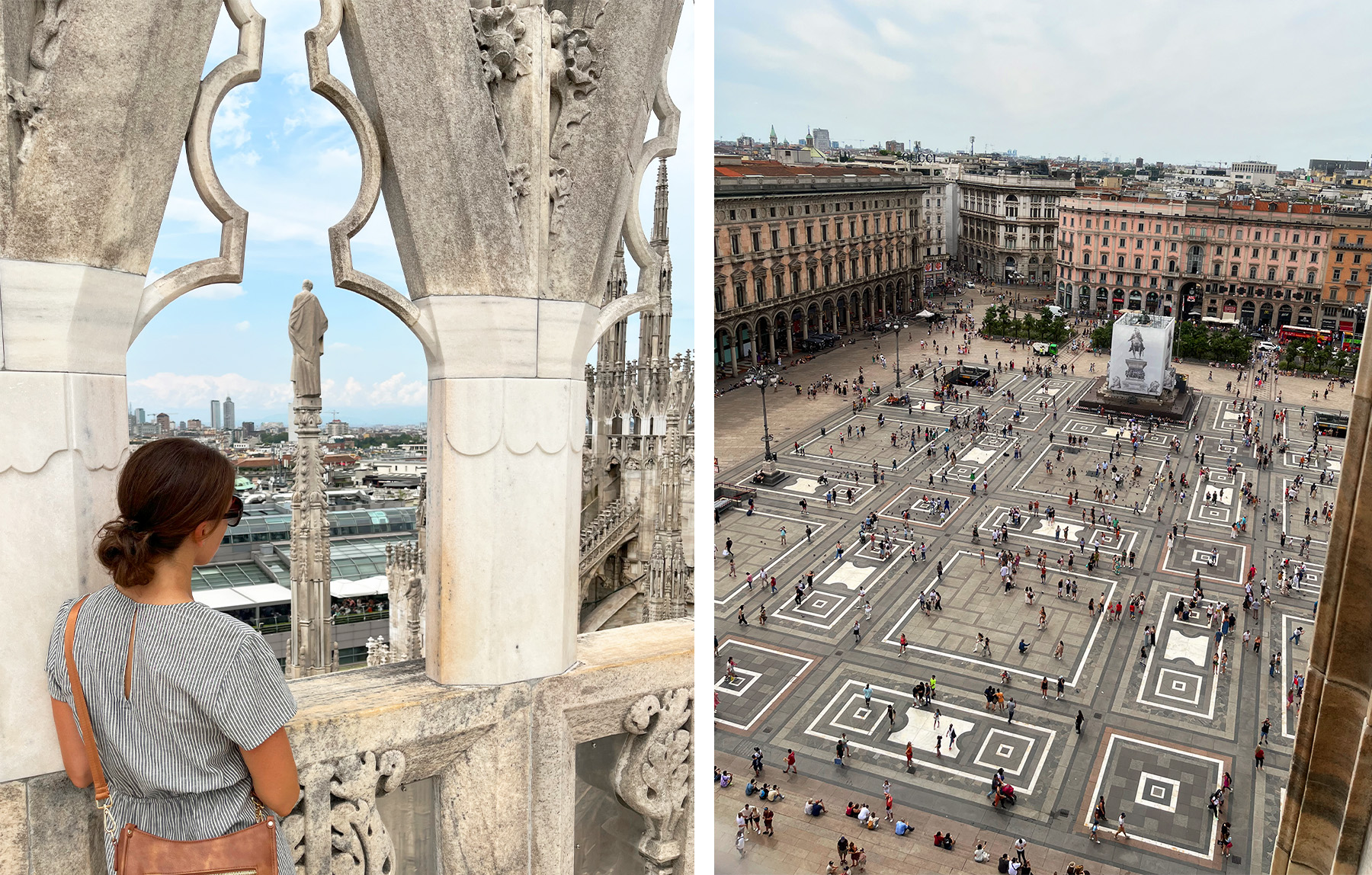
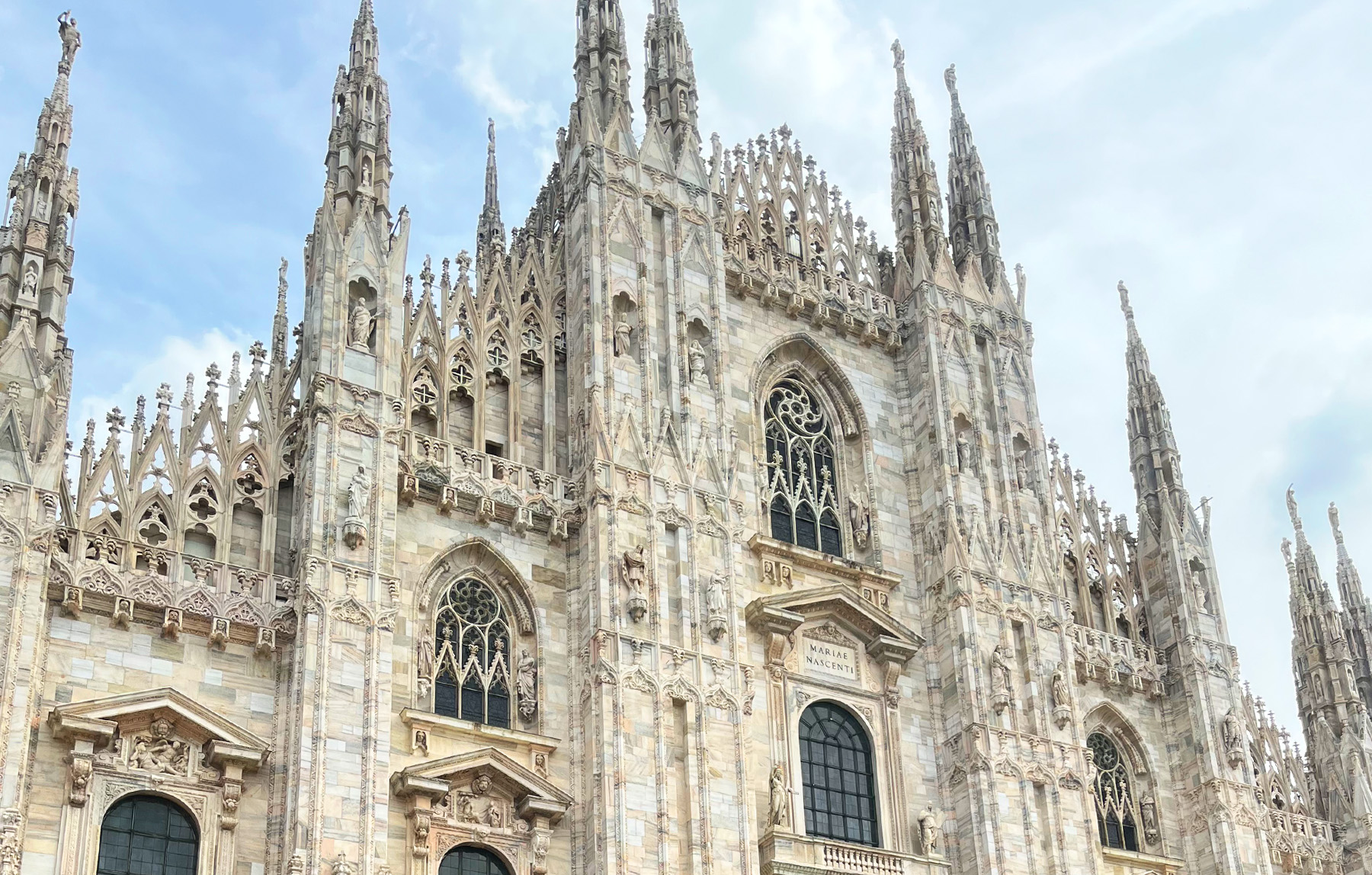


[…] Our visit began at the entrance to the stairs, which was a relatively easy climb to the first part of the terrace. Here there was a traffic jam of people stopping in their tracks to take photos of the first glimpse of the magnificence that is the Duomo. Little did most people realize, this was only the first of many opportunities to see the church’s intricate details up close as the walk continued around all four sides. Like other visitors, I was immediately swept away by the beauty of the architecture as we made our way through a forest of 135 soaring spies, 3,400 sculptures, gargoyles and other decorative elements, which took more than 600 years to complete. We were also treated to sweeping views of the city and square below from the rooftop of the church before making our way down to its interior. Late Gothic in style and built to impress, we marveled at the stone arches, flying buttresses, marble floors and stained glass windows that flooded the space with light. Back in the square we had an even greater appreciation for its exterior, which is covered entirely in expensive marble from a private quarry. The Duomo is just as impressive as one would expect, and perhaps even more so given its grandeur in both size and history. You can read more about the Duomo and other interesting facts in my post here. […]
LikeLike