
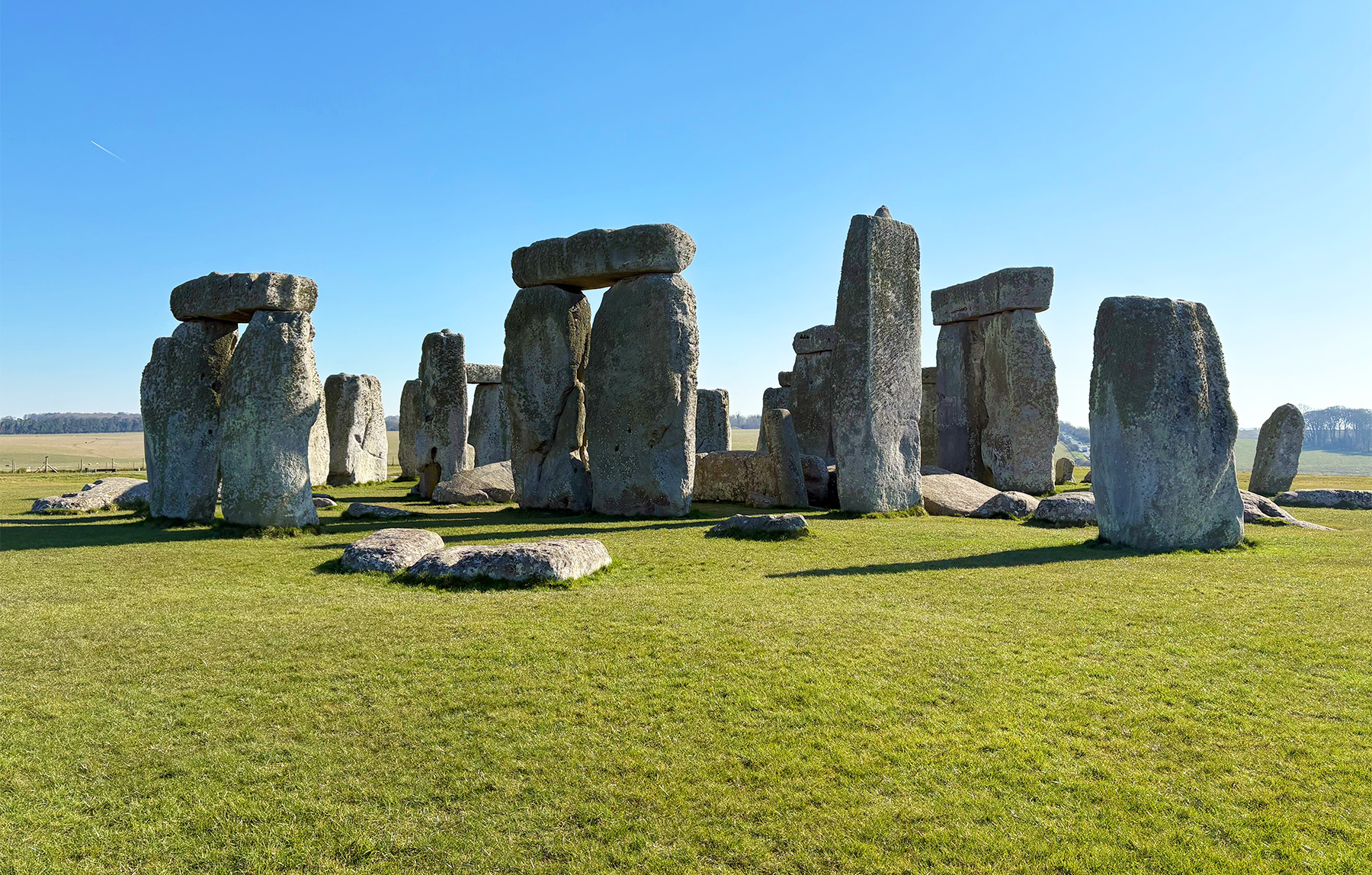
Stay the word “Stonehenge” and chances are most people will instantly know what you’re talking about. The neolithic stone circle is an image that one can instantly conjure thanks to its omnipresence in pop culture throughout the ages. One of the things that makes Stonehenge such a recognizable place is the mystery behind its soaring stones. Where did they come from? How did they get there? What were they used for? Archeological observations? Burials and sacrifice? Team building activity for giants? Landing site for aliens? Moved by the magic of wizards? While archaeologists and historians have uncovered lots of details proving and disproving these questions, intrigue for the site remains.
I had the opportunity to visit Stonehenge in the spring just days before the spring solstice. I’d been traveling to the UK for 10 years at this point and never ventured out to the site, mainly because it didn’t quite fit in with our itinerary, but also because of all the stories you hear about it being super crowded. This time though we booked a small group tour from Bath with Mad Max Tours, which would take us to Stonehenge as well as other stone circles at Avebury and the Cotswold villages of Lacock and Castle Combe. And while we weren’t able to book one of the coveted tours to the inner circle because of the timing of our trip, the benefit of booking with Mad Max meant that we were guaranteed to be a small group on a small minibus with the agility and nimbleness to get in and out of these destinations, often beating the larger tour buses with engaging commentary from our guide Kevin as we traveled through the charming English countryside.
Our first stop of the day was Stonehenge, which is located on the Salisbury Plain about 2 hours from London by car and under an hour from Bath, which makes it an easy daytrip from either location. While I will say Stonehenge wasn’t exactly what I had expected, I’m glad to have seen it. Our group was the first to arrive at the site before it officially opened, and you have the option of a 25-minute walk to the stone circle or take a short ride on the complementary shuttle bus. From here we marveled at the stones (sans crowds) from all angles, a clockwise walking path dotted with numbers corresponding to an audio guide on the official app leading our way.

We learned that the first settlers came to this area more than 6,000 years ago, with the first construction of what we know as Stonehenge beginning 5,000 years ago during the Bronze Age. This include the 5 iconic inner trilithons (2 upright stones capped by a horizontal stone) and the outer circle. A second phase marked the placement of the so-called smaller “blue stones”, each weighing 5,000 tons, followed by a third phase with larger stones that have been determined to be the same rocks as those at Avebury (more on that next), but beaten into a smoother, more deliberate shape rather than left jagged. The site was likely rearranged for various uses over time and reconstructed in more recent times, hence the beauty and mystery that surrounds it to this day. I should also note that it was colder and windier at the site, so consider a jacket even if you’re traveling on a sunny spring day. Afterwards we took the shuttle bus back and explored the visitor center exhibit area and gift shop and grabbed a snack before getting back on our minibus to the next stop.
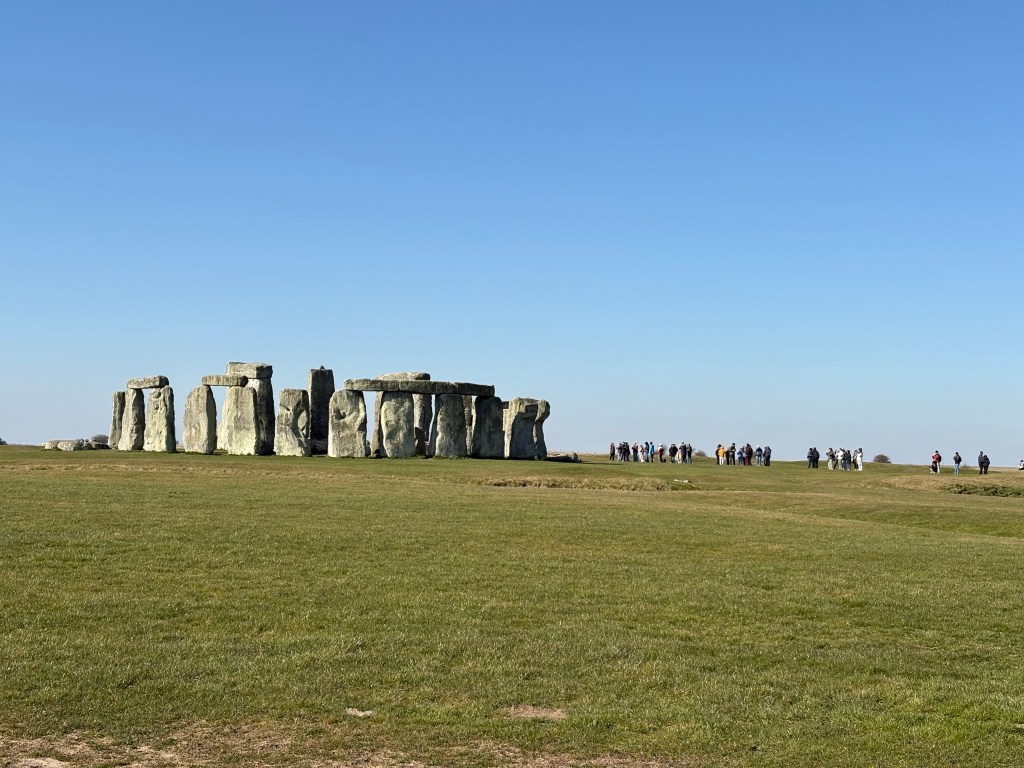
We had more time to explore the various stone circle areas at Avebury, which is considered Europe’s largest neolithic stone circle. It’s actually 16 times larger than Stonehenge and spread over 4 quadrants surrounding a village. Here you can freely walk in between and go right up to touch the stones (sadly we didn’t get transported back in time, sorry Outlander fans) while enjoying the peaceful surroundings.

We loved our time at Lacock next, a National Trust village that remains unchanged with no significant construction in more than 200 years, hence you’ll find examples of 3 distinctive building styles from Tudor to Jacobian and Gregorian, making it a frequent filming location for movies like Harry Potter and Downton Abbey. After wandering along the handful of adorable streets, we snacked on delicious pasties and treats from the Lacock Shop & Deli (12 High Street), followed by coffee from CoCo Chemistry Chocolates (3 West Street), played in the park near the parking area and scoped out the Lacock Abbey (it was here that the first photo from a negative was captured of one of its windows in 1835).
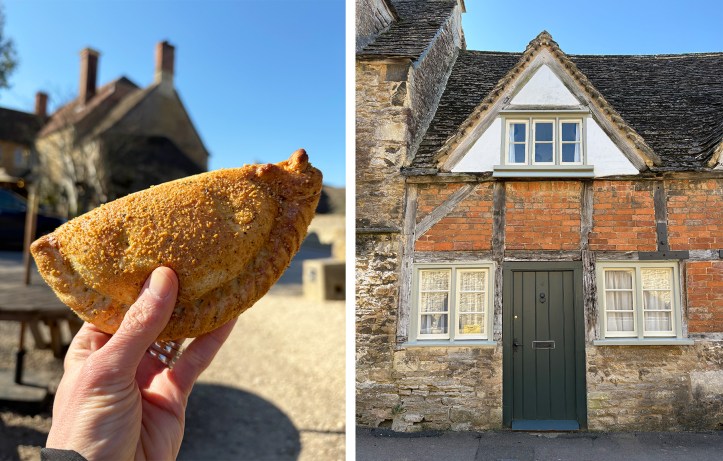

Our last stop was Castle Combe, which is often called the “prettiest village in England”.
It was once quite wealthy due to a booming wool industry until the stream dried up, leaving the village in a sort of time warp. Here we had time to explore its charming streets with little cottages, as well as the garden area near the former 14th century manor house-turned-hotel, St. Andrew’s church and the lush woods that rise above the village. We found it lovely and quaint, although a bit sleepy in the early spring with buds just waiting to burst in the coming days.

The nice thing about our tour is that it packed in quite a bit in a single day, departing Bath bright and early in the morning, a good amount of time at each stop and returning early enough for us to catch an evening train to London where we were staying next. If you find yourself in Bath, you can read more in my Guide to Visiting Bath (coming soon!), and feel free to check out the other tour offerings by Mad Max for daytrip inspiration.

 Boarding Pass
[…] Also Good to Know On our last day in Bath (before catching the train to London) we booked a small group tour with Mad Max Tours to Stonehenge, Avebury and some of the nearby Cotswold villages. It was a day well spent with engaging commentary from our guide and a variety of places visited, which you can read about in my post Discovering the Mystery of Stonehenge. […]
LikeLike